
Executive Summary
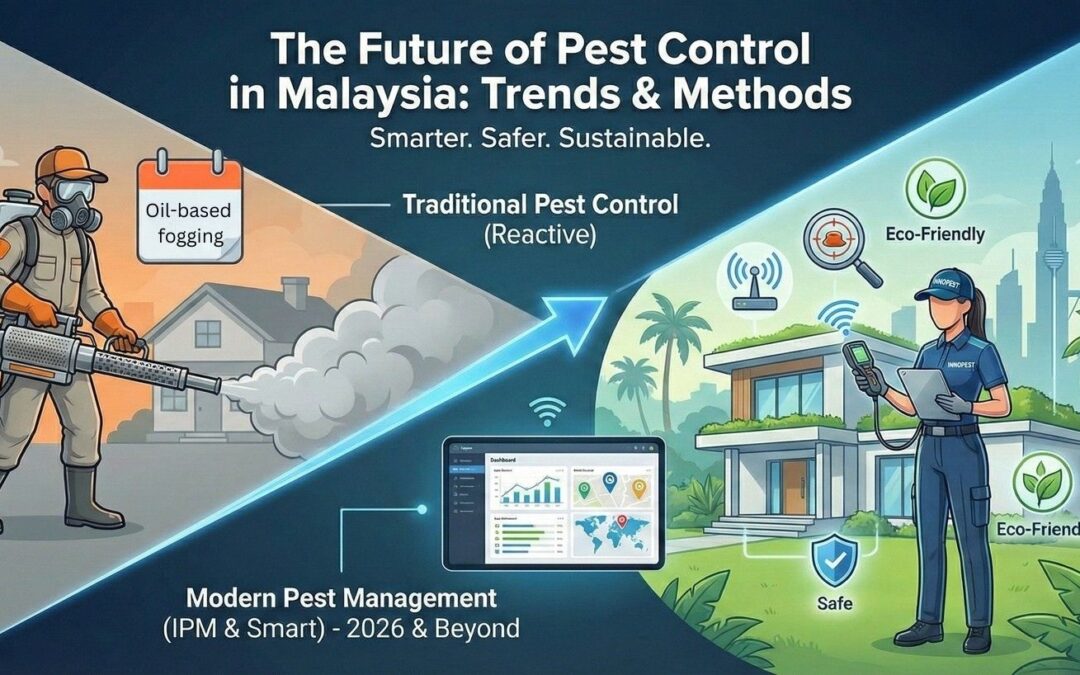
Pest control in Malaysia is rapidly shifting from reactive chemical spraying to preventive, data-driven strategies. By 2026, the industry standard will be defined by Integrated Pest Management (IPM), smart IoT monitoring, precision treatments, and eco-friendlier solutions. This evolution ensures more effective, longer-lasting results for residential, commercial, and industrial properties across the country.
What Is Changing in Pest Control in Malaysia?
The pest control landscape in Malaysia is evolving due to increasing urban density in areas like Kuala Lumpur and Penang, tropical climate challenges, rising pest resistance, and higher client expectations for safety.
Traditional calendar-based "fogging and spraying" is increasingly being replaced by risk-based, evidence-led pest management.
Modern pest control services now focus on:
- Early detection rather than waiting for a crisis.
- Long-term prevention rather than repeated, temporary treatments.
- Precision application rather than blanket chemical exposure.
This shift improves overall control outcomes while significantly reducing unnecessary chemical exposure for your family or employees.
Integrated Pest Management (IPM): The Foundation of Modern Pest Control
Integrated Pest Management (IPM) is no longer just a buzzword; it is now the recognized standard framework for effective, professional pest control in Malaysia.
What Is IPM?
IPM is a structured, holistic approach that combines multiple synergistic methods to manage pests effectively with minimal risk to humans and the environment.
Core Components of an Innopest IPM Strategy:
- Inspection and Risk Assessment: Thoroughly identifying pest sources, entry points, and high-risk zones.
- Active Monitoring: Using traps and sensors to track pest activity trends over time.
- Environmental Control: Recommendations for sanitation, moisture control, and habitat reduction to make your property less attractive to pests.
- Physical and Mechanical Methods: Utilizing exclusion (sealing gaps) and trapping systems.
- Targeted Chemical Treatment: Using pesticides only as a last resort and precisely where needed, when thresholds are exceeded.
IPM reduces reliance on broad-spectrum chemicals while improving long-term pest suppression.
[LINK: Learn more about Innopest’s IPM approach for commercial properties here.]
Preventive Pest Control vs Reactive Treatment
Preventive pest control aims to stop infestations before they establish, while reactive treatment responds only after pests are visible and damage has begun.
Why Prevention Matters in the Malaysian Climate
Malaysia’s hot, humid, tropical climate supports year-round pest activity—there is no "off-season" for pests like termites, cockroaches, or mosquitoes.
Waiting for visible infestations often results in:
- Higher treatment frequency and costs.
- Increased reliance on stronger chemicals.
- Greater structural damage and health risks (e.g., Dengue).
Preventive pest control reduces infestation severity, improves long-term cost efficiency, and supports safer indoor environments.
Smart Monitoring and Data-Driven Pest Detection
Digital technology is revolutionizing how we handle pest management in Malaysia, improving accuracy and response times.
What Is Smart Pest Monitoring?
Smart monitoring uses IoT sensors, digital traps, and data analytics to detect pest activity early—often before a human eye could see it—and track trends 24/7.
Benefits of Smart Monitoring for Businesses
- Early Warning: Detect rodent or insect activity before infestations escalate.
- Reduced Intrusions: Fewer unnecessary physical inspections and treatments.
- Objective Data: Decisions are based on hard data, not guesswork.
- Better Documentation: Crucial for food safety audits (HACCP, GMP) and regulatory compliance.
Targeted Pest Control Methods
Chemical treatments remain an important tool in the professional arsenal, but their application is becoming much more precise.
What Is Targeted Pest Control?
Instead of spraying an entire room, targeted pest control applies treatment strictly to active pest zones, entry points, and specific harborage areas based on the pest's biology.
Common Targeted Methods:
- Baiting Systems: Highly effective for subterranean termites and rodent control, using the pests' own behavior against them.
- Gel Baiting: Precise spot treatment for cockroaches and ants in kitchens and sensitive areas.
- Localized Application: Treating only cracks and crevices instead of full-area spraying.
Targeted methods improve effectiveness while drastically reducing environmental impact.
Low-Impact and Safer Pest Control Solutions
There is growing demand among Malaysian homeowners and businesses for safe pest control methods that prioritize sustainability.
These methods are especially suitable for homes with children and pets, food processing facilities, healthcare environments, and sensitive locations. Examples include:
- Insect Growth Regulators (IGRs) that disrupt the pest life cycle.
- Botanical or microbial bio-pesticides.
- Physical exclusion and proofing (sealing the property).
- Humane trapping systems.
Climate Influence on Pest Control in Malaysia
Malaysia’s climate plays a major role in pest behavior. Factors like consistent high humidity and warm temperatures create ideal breeding conditions year-round. Furthermore, monsoon seasons often trigger surges in specific pests, such as subterranean termites driven indoors by waterlogged soil, or increased mosquito breeding sites.
Effective pest control strategies must adapt based on these climate-related patterns rather than relying on fixed, outdated schedules.
How Pest Control Effectiveness Is Measured Today
Modern pest control is evaluated by outcomes, not just activity.
Key Performance Indicators (KPIs):
- Quantifiable reduction in pest sightings or trap catches.
- Long-term infestation control (staying pest-free).
- Compliance with safety and hygiene audits.
- Quality of digital reporting and transparency.
Common Questions About Pest Control in Malaysia
What is the best modern pest control method in Malaysia?
The most effective modern method is Integrated Pest Management (IPM). Rather than relying on a single spray, IPM combines thorough inspection, continuous monitoring, preventive structural changes, and targeted treatments for long-term results.
Is chemical spraying still necessary for pest control?
Yes, sometimes, but only when justified by evidence. Modern pest control uses chemicals selectively as a last resort in targeted areas, rather than Routine, blanket spraying.
Why is IPM important specifically for Malaysia?
IPM is crucial because Malaysia’s tropical climate creates year-round pest pressure. A reactive, spray-only approach is unsustainable here. IPM addresses root causes to manage this constant pressure without excessive chemical use.
Are modern pest control methods safer for my family and pets?
Yes. Modern methods prioritize low-impact solutions, precise gel baiting, and preventive measures, significantly reducing chemical exposure in living areas compared to traditional fogging.
How often should professional pest control be done?
Service frequency should depend on your specific risk level, current pest activity, and site conditions. A professional assessment will determine if you need monthly monitoring or quarterly preventive visits, rather than a generic fixed schedule.
Conclusion: Partner with the Future of Pest Management
Pest control in Malaysia is moving toward preventive, data-driven, and targeted methods. The days of "spray and pray" are ending.
By embracing Integrated Pest Management and smart technologies, homeowners and businesses can enjoy better health outcomes, stronger property protection, and environmental responsibility.
Are you ready to modernize your pest defense?
Don't rely on outdated methods. Contact Innopest today for a comprehensive site assessment and transition to a smarter, future-ready pest management strategy.
Recent Comments